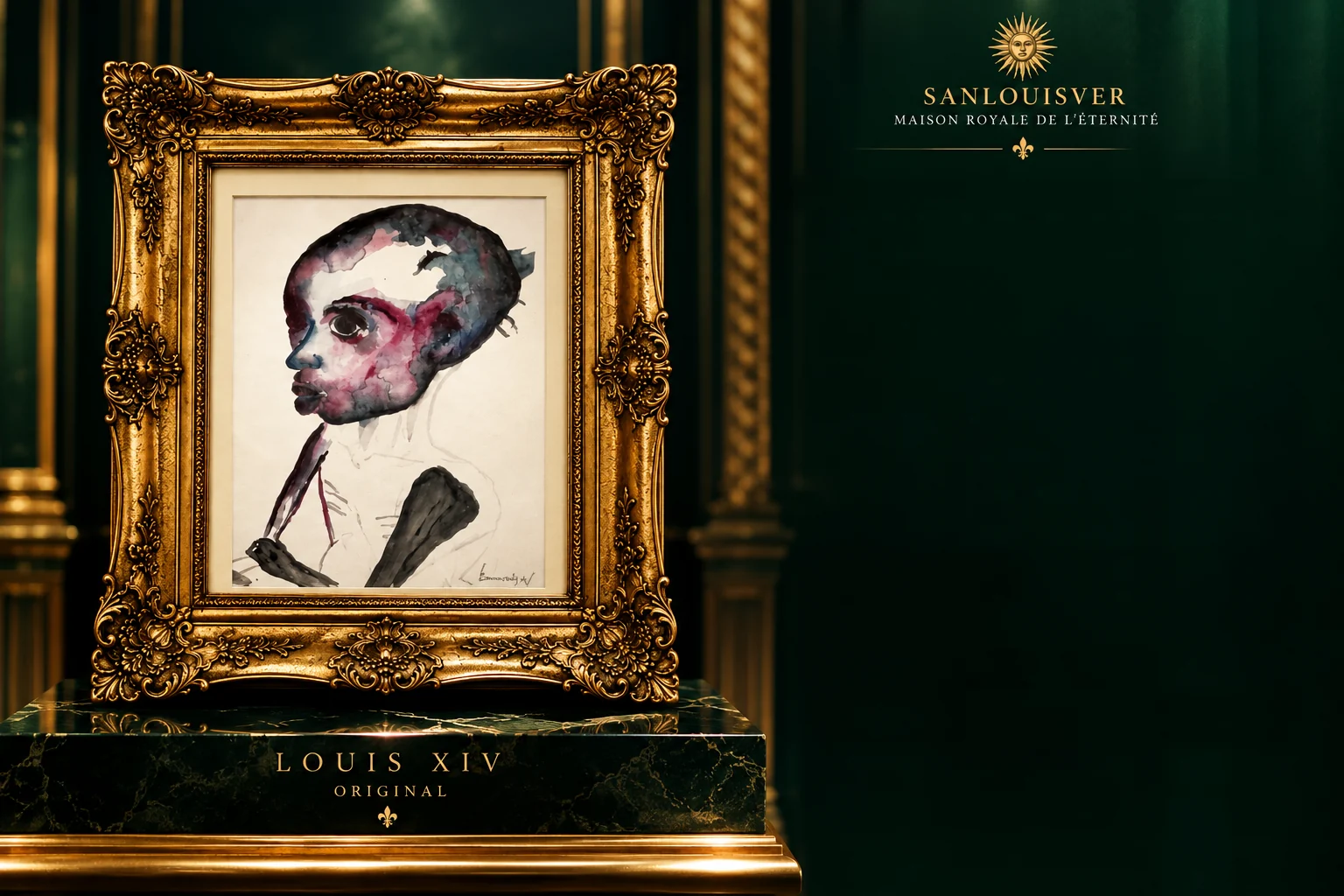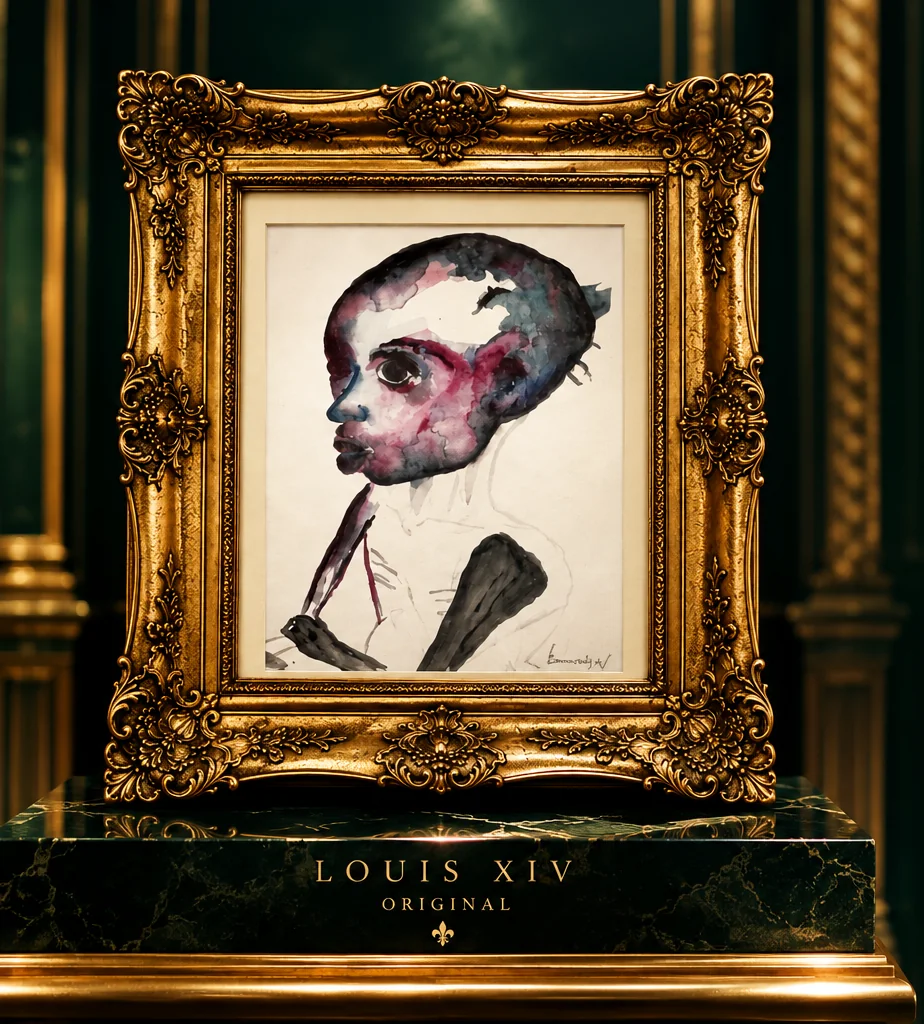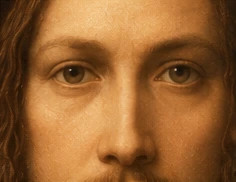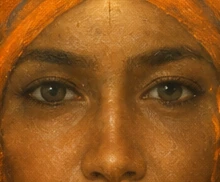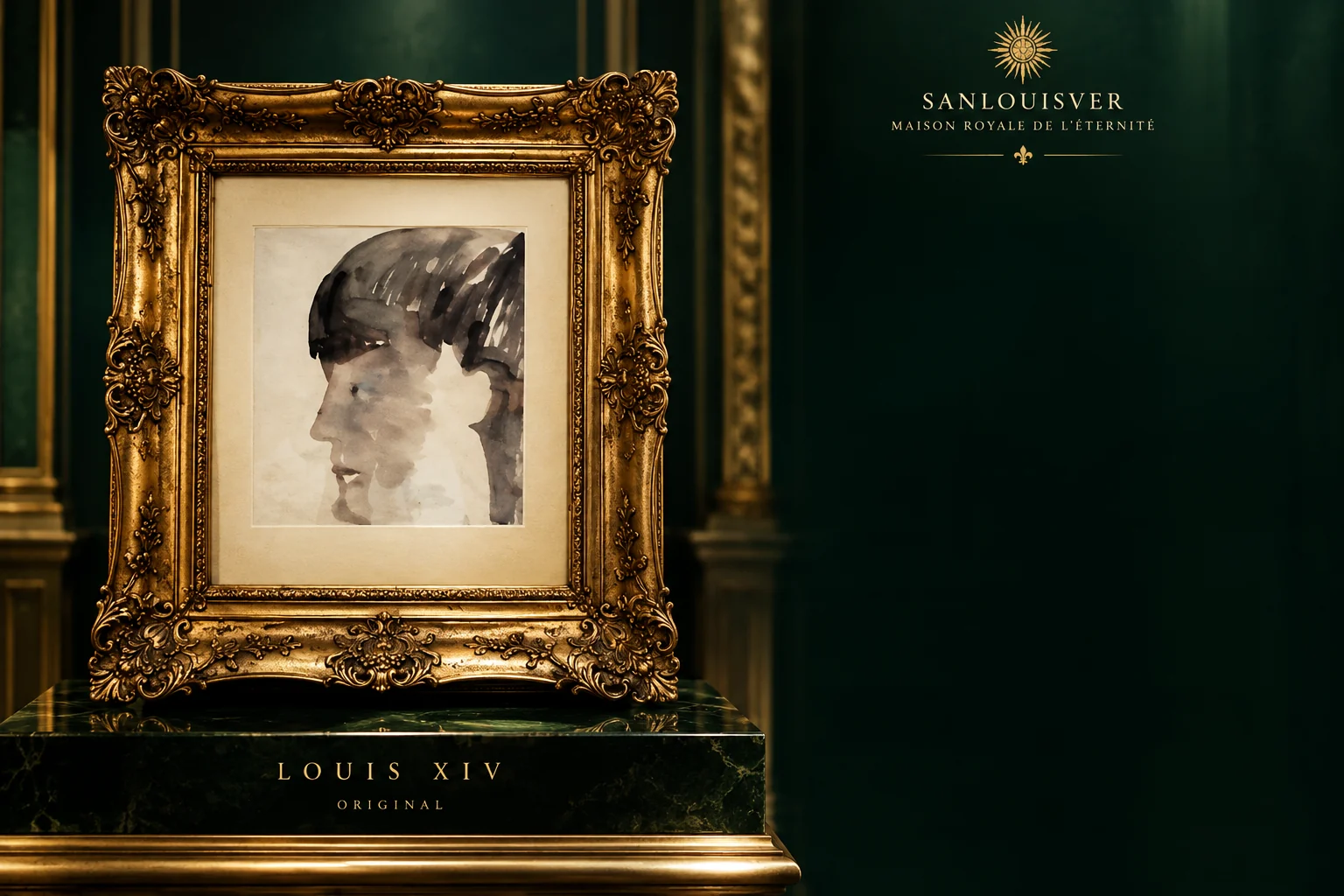
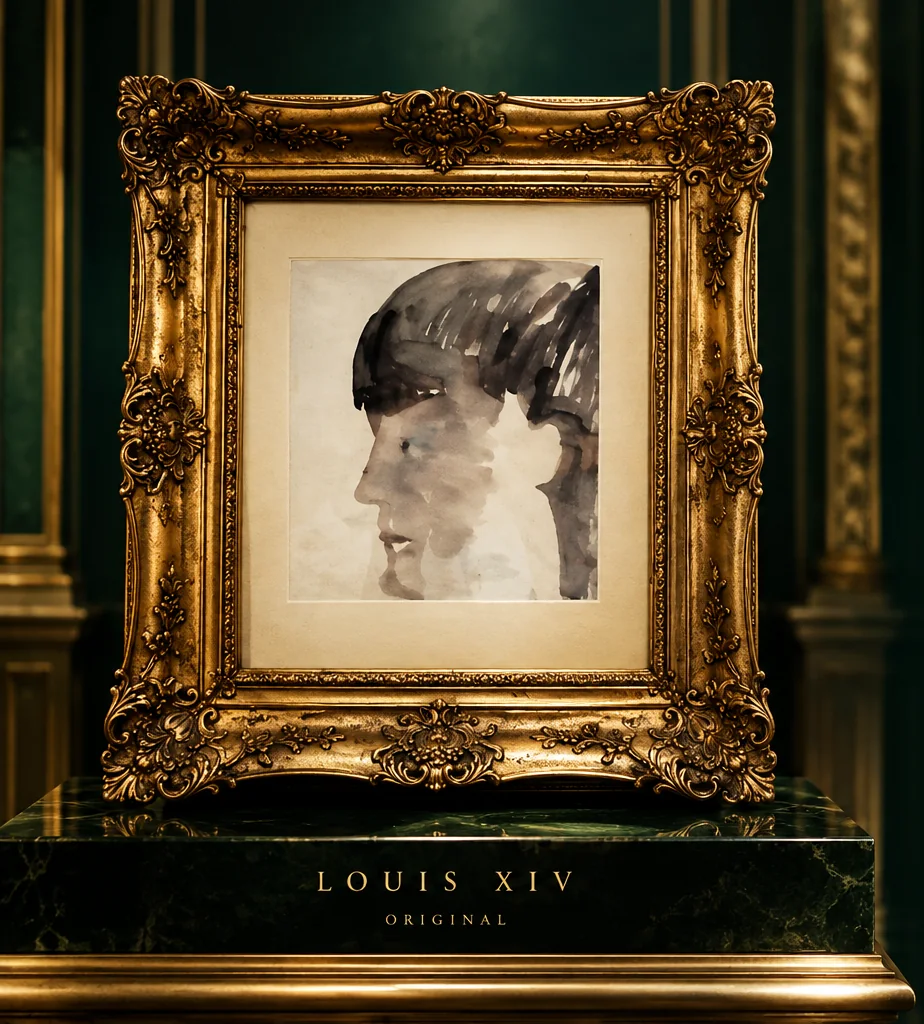
KOPF EINES KINDES
TÊTE D’UN ENFANT
- ARTIST
- Louis XIV
- MEDIUM
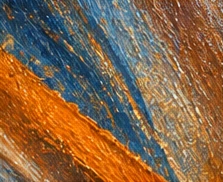
- Watercolour and mixed media on paper
- ORIGINAL
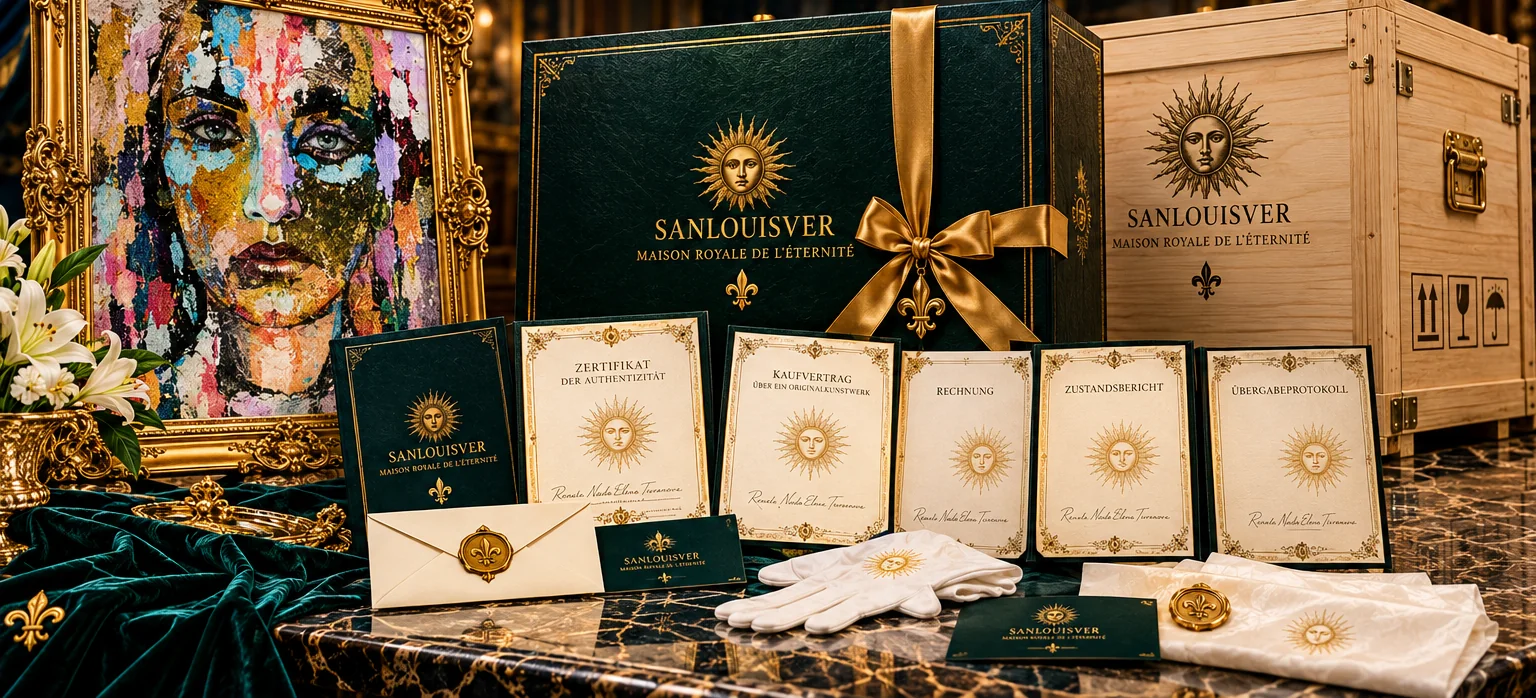
- Unique work No print. No reproduction. No copy.
- FRAME
- Historic frame Gilded wood, handcrafted
- CONDITION
- Excellent condition
PRICE €2,000,000
“A quiet portrait of timeless truth.”
ART ANALYSIS: Kopf eines Kindes
“Kopf eines Kindes”
by Renata Nada’Elena Turanova stands in a clearly traceable art-historical lineage that can be followed back to Albrecht Dürer.
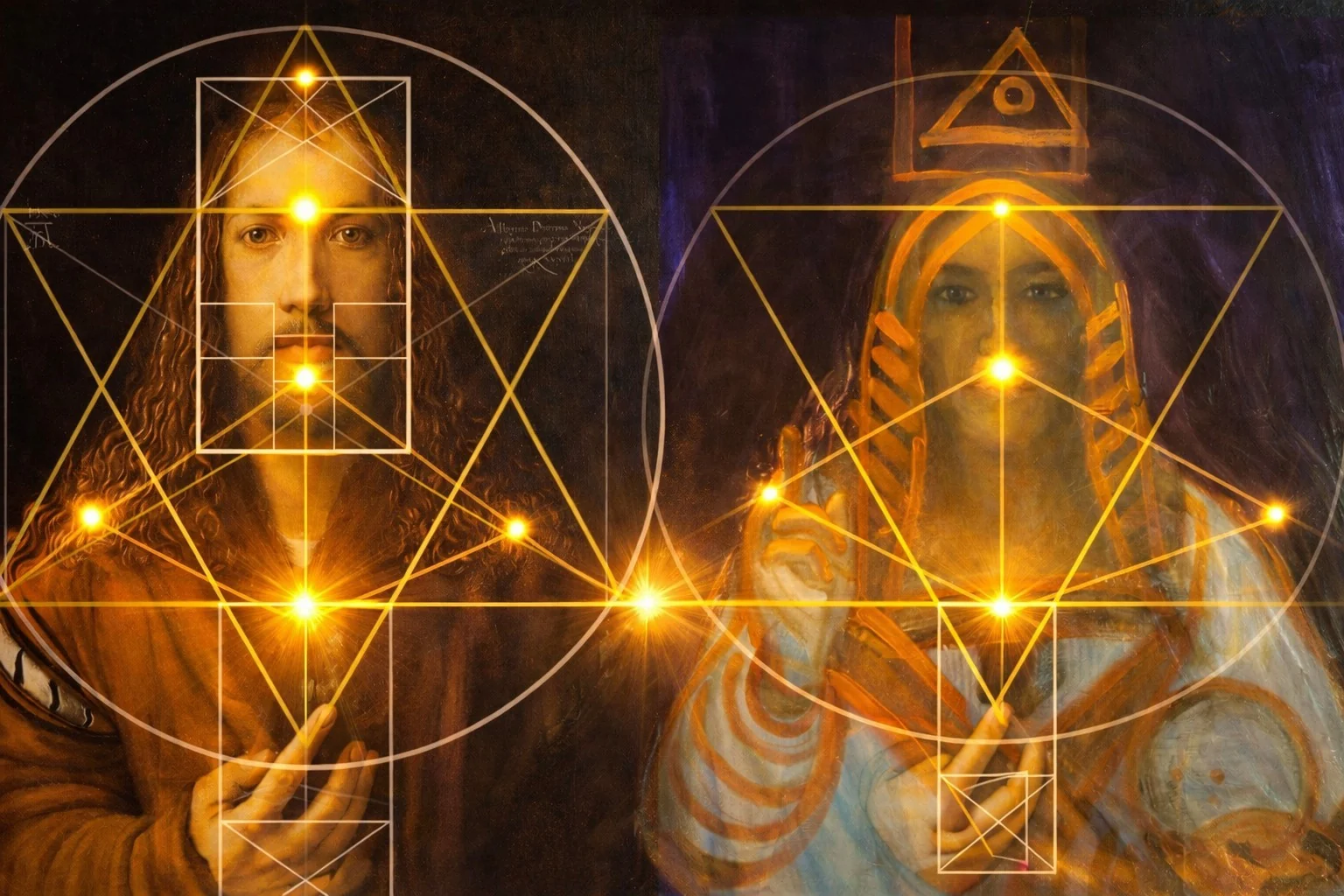
What appears at first glance to be a sensitive, almost silent portrait reveals on closer inspection a precisely calculated order – a construction that translates the visible into measurable proportions.
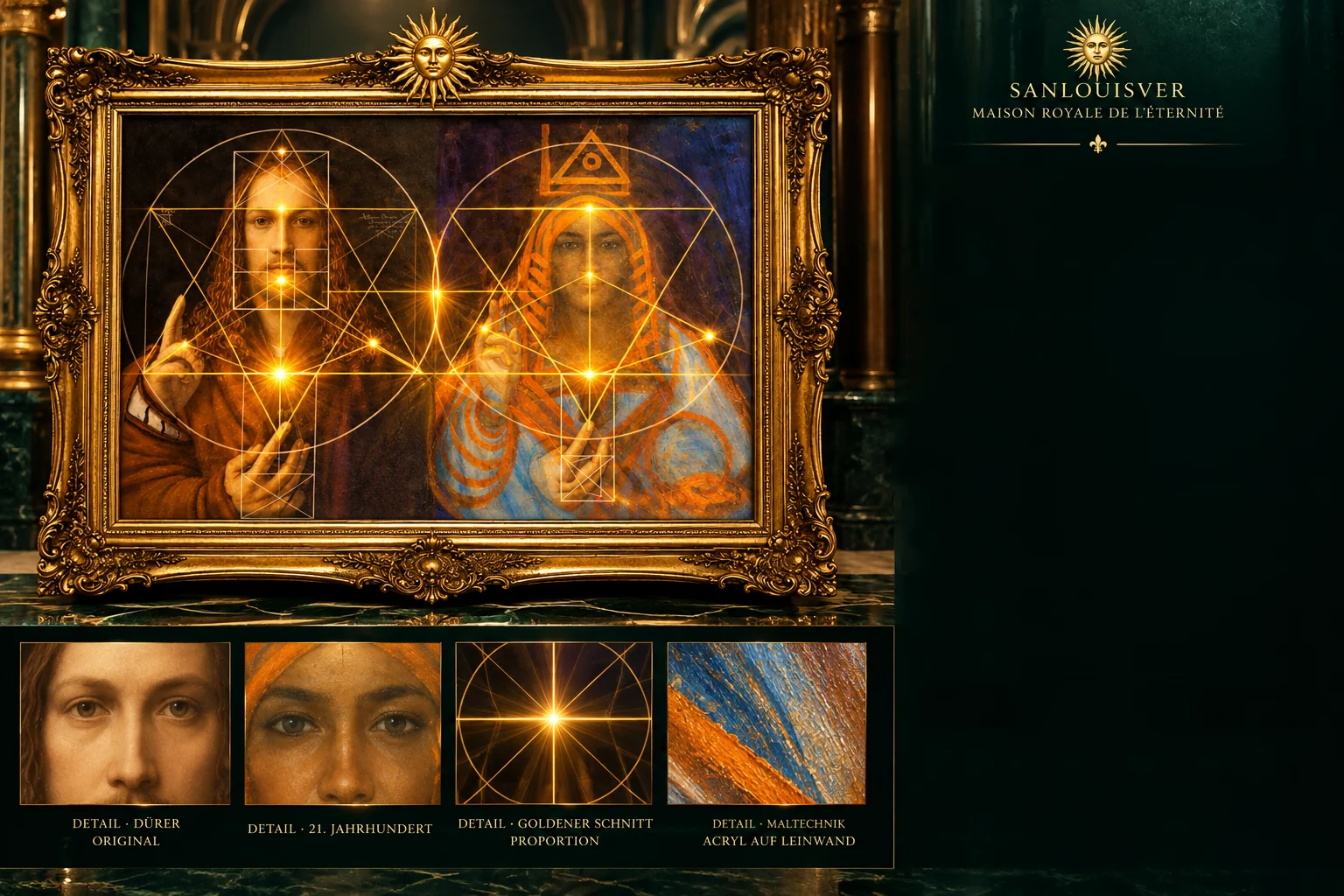
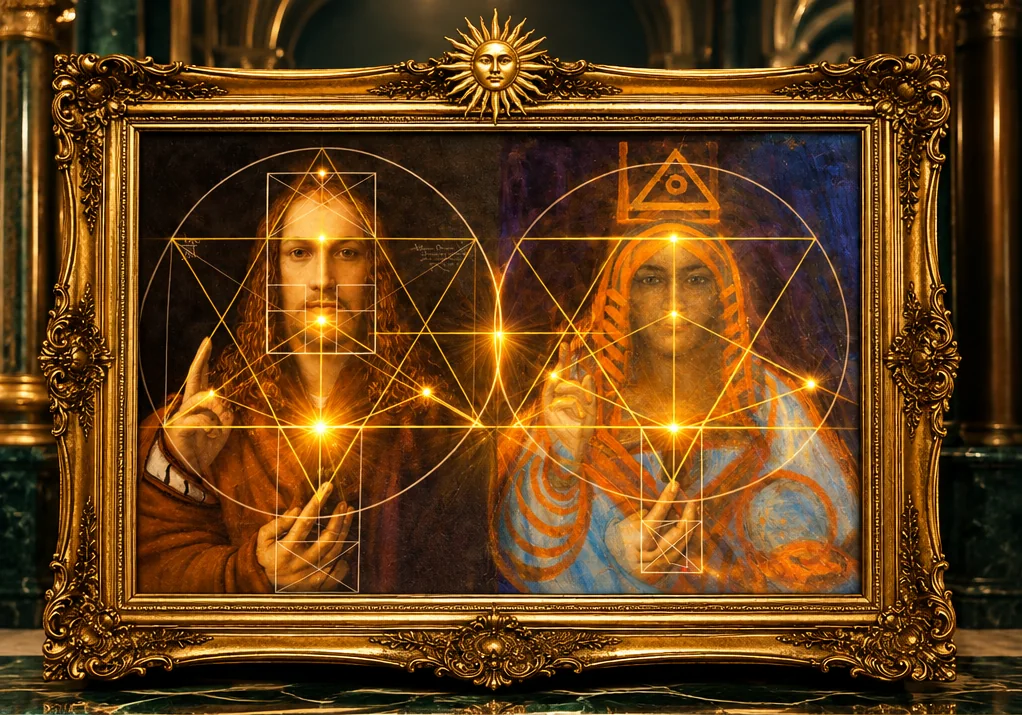
The basic structure already follows the principle of the golden ratio. The vertical division of the head can be determined as a ratio of about 1 : 1.618. From the crown to the eye line the distance measures roughly 0.618 of the total height, while the remaining part down to the chin takes up about 0.382. The eye line thus becomes – as in Dürer’s strictly constructed self-portraits – the decisive φ nodal point of the picture.
In the horizontal extent a comparable regularity appears: the width of the face corresponds to approximately five eye widths, while the distance between the eyes equals a single eye width.
This classical proportion, already regarded as the ideal measure in the Renaissance, recurs with similar rigour in Dürer’s famous frontal portrait, above all in the Self-Portrait in a Fur-Collared Robe, where the symmetrical axis divides the face into two almost identical halves.
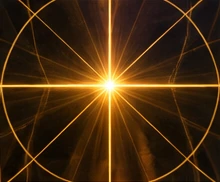
Beyond this, Turanova’s work reveals a graduated order of surfaces that can be described by the Fibonacci sequence (1 : 1 → 2 : 3 → 3 : 5 → 5 : 8). This rectangular structure organises the face into clearly defined zones:
The forehead, at about 0.618, forms the dominant mass, the middle zone (eyes and nose) acts as a mediating unit, while mouth and chin form the concluding, condensed area.
The diagonal axes of tension play a special role. Their points of intersection can be located exactly in three central areas: eye, root of the nose and line of the mouth.
These points form an inner triangle whose proportions approach the ratio 1 : √2 : φ. Here a parallel emerges with the geometric thinking of Dürer, who in his theoretical writings sought to derive beauty from mathematical relations.
The circular form that encloses the head also follows a clear measure: its diameter equals the height of the head (1 : 1).
The centre of this circle lies not exactly in the middle but slightly above the line of the nose – a subtle intervention that enlivens the static balance through a barely perceptible shift.
This deliberate departure from strict symmetry is an element that already shaped the art surrounding Louis XIV, in which order and representation were always complemented by a controlled dynamism.
In comparison with Dürer it becomes clear: whereas he openly pursues the construction and lets the picture appear almost as proof of his theory of proportion, Turanova integrates the same principles into a calmer, less demonstrative visual language.
The geometry remains at work, yet recedes behind the appearance.
Thus a work comes into being that unites two levels: the immediate, sensuous perception of a child’s face and a deeper, hidden order of number and proportion.
Precisely therein lies its art-historical significance:
It takes up the great tradition of the Renaissance and at the same time carries it further – as contemporary proof that the idea of measurable beauty has lost none of its validity.
Kopf eines Kindes – a work by Renata Nada’Elena Turanova
It is more than a picture.
It is a construction of measure, proportion and inner order – carried by that idea which already governed the great ateliers:
That true beauty springs not from chance, but from law.
In “Kopf eines Kindes” this insight is condensed.
Every line follows an invisible geometry, every focal point is set – in balance between intuition and precision.
This work does not speak loudly.
It acts.
Quiet, concentrated, inescapable.
For collectors, gallerists and discerning spaces, a rare opportunity presents itself here:
A picture that asks not only to be looked at but to be understood – and in precisely this unfolds its timeless power.
Do not simply acquire a work of art.
Acquire a system of order that endures through the centuries.
Available for:
- – Private collection
- – Gallery exhibition (large format)
- – Curated presentations
Enquiries and presentations on request.
Louis 14.
Korinack